What you'll learn
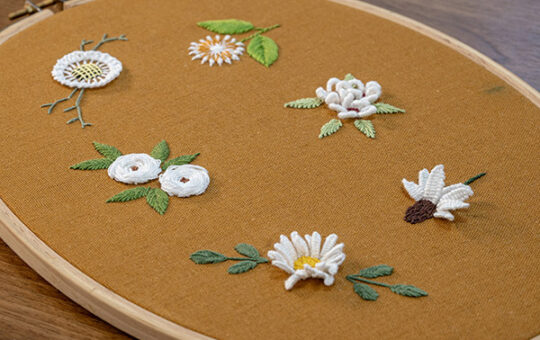
Tactile 3D Flowers
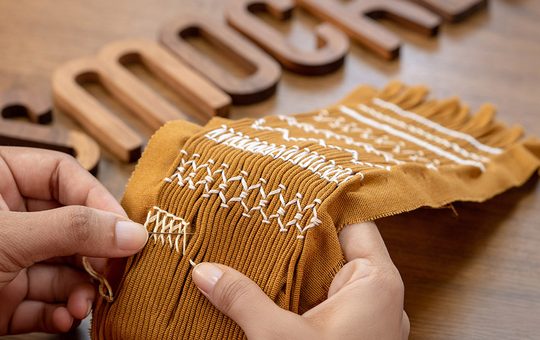
Macro ASMR Stitching
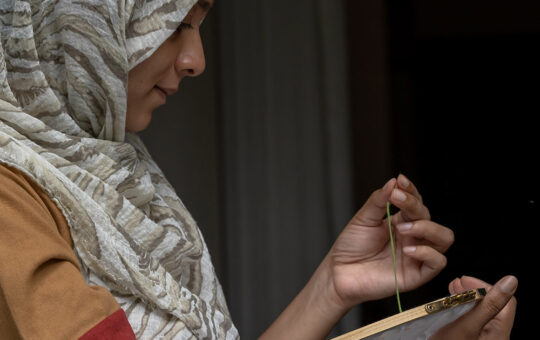
Beginner-Friendly Techniques
Mindful Slow Crafting
Framed Graduation Project
About this course
Welcome to a quiet, structured creative space designed to guide you step-by-step through the world of dimensional hand embroidery. This masterclass takes you from flat fabric work into tactile, raised textile art, focusing on deliberate movements, clear techniques, and rhythmic stitching.
Guided by clear, unobstructed close-up views, you will construct a balanced 9-chamber floral sampler on dark green linen. The lessons emphasize proper thread tension, ergonomic hand positioning, and physical handling of materials—from separating single plies of floss to casting high-relief loops and sculpting velvet pile surfaces. Each module breaks down structural stitches in detail, allowing you to follow along naturally, build muscle memory, and develop confidence in hand embroidery at your own pace.
Module 1: Materials, Tension & Studio Preparation
Lesson 1: Course Welcome & Introduction
Core Syllabus Focus:
- Setting up an ergonomic, well-lit workspace to stitch comfortably without neck or hand fatigue.
- Structural walkthrough of the dark green linen 9-flower sampler layout.
- Overview of the progression from flat anchor stitches to architectural, raised 3D elements.
- Principles of deliberate, mindful crafting and setting a sustainable personal pace.
Lesson 2: Canvas Preparation
Core Syllabus Focus:
- Evaluating fabric weights and thread stability; choosing non-stretch natural woven linens, calico, or cotton.
- Step-by-step mounting of fabric into wooden hoops to achieve and test drum-tight surface tension.
- Transferring the 9-chamber circular geometry cleanly using heat-erasable marking tools.
- Threading techniques, understanding strand counts, and knotting methods that sit flat against the reverse side.
Module 2: The Core 3D Flower Masterclass
Lesson 3: Flower 1: The Central Layered Sunflower
Core Syllabus Focus:
- Separating individual strands from six-ply cotton floss smoothly to avoid twists and knots.
- Executing petal tension with the Lazy Daisy (detached chain) stitch along circular guidelines.
- Layering concentric rings of petals to establish natural depth and overlap.
- Wrapping and packing tight, two-turn French knots to form a dense seed core.
- Balancing angled Fishbone stitches to ground the base with symmetrical leaf accents.
Lesson 4: Flower 2: The Textured Knotted Lazy Daisy
Core Syllabus Focus:
- Operating long straw needles to manage surface wraps comfortably without snagging.
- Working the Knotted Lazy Daisy variation by anchoring wraps directly at the fabric line for raised petal roots.
- Blending multi-tone stamen centers using graduated rings of soft neutral French knots.
- Stitching open Fly Stitch leaf tracks, controlling anchor length to shape natural, tapered foliage.
Lesson 5: Flower 3: The Dimensional Bullion Daisy
Core Syllabus Focus:
- Tool mechanics: selecting uniform-barrel milliners or straw needles suited for smooth bullion work.
- Wrapping, guiding, and flattening multi-turn thread coils to form rigid, three-dimensional petal bars.
- Maintaining thumb tension over coils while pulling the needle barrel through.
- Working flat, smooth Satin Stitch leaves to create crisp visual contrast against raised bullion work.
Lesson 6: Flower 4: The Concentric Woven Wheel Rose
Core Syllabus Focus:
- Laying a stable, evenly spaced five-point foundation star directly on the linen.
- Surface weaving mechanics: working full six-strand floss entirely above the canvas without piercing the background cloth.
- Regulating tension to create an elevated, dome-like rose center without pulling the foundational spokes inward.
- Constructing border Blanket Stitch leaf edges to frame the base of high-profile blossoms.
Lesson 7: Flower 5: The Braided Rosette Chain Blossom
Core Syllabus Focus:
- Thread dynamics: navigating multi-ply thread bundles through twisted, interlocking loops.
- Executing the Rosette Chain Stitch along a continuous curved guideline to build a braided, raised rim.
- Layering concentric two-tone stamen centers using contrasting floss shades.
- Adding delicate background details using radiating, long-tailed Pistil stitches.
Lesson 8: Flower 6: The Hooded Cast-On Blossom
Core Syllabus Focus:
- Casting uniform slip-knot loops onto an extended needle shaft to engineer free-standing petals.
- Using auxiliary guides, such as a pen-straw sleeve, to widen loop diameter and scale petal volume.
- Controlling petal arching to shape upright, hooded blossoms.
- Building leaf volume using the Raised Padded Fishbone stitch over a central straight-stitch foundation spine.
Module 3: Assignments & Advanced Elements
Lesson 9: Project Assignment: Dimensional Floral Sampler Milestone
Core Syllabus Focus:
- Transitioning from isolated practice modules to managing a cohesive, independent project.
- Sourcing materials, stretching fabric, and transferring the multi-element milestone template.
- Selecting and placing three mastered flower techniques into an overlapping layout.
- Integrating flowing vines and background greenery to balance focal points and negative space.
- Preparing clean reverse-side thread finishes and staging clear, well-lit project photos for review.
Lesson 10: Flower 7: The Plush Velvet Turkey Work Marigold
Core Syllabus Focus:
- Laying dense tracks of continuous, interlocking thread loops secured with flat base stitches.
- Controlling loop height across uniform rows to establish consistent depth.
- Slicing open thread loops cleanly using high-precision embroidery scissors.
- Brushing, separating, and precision-trimming thread fibers into a rounded, plush velvet dome.
Lesson 11: Flower 8: The Pinned Loop Peach Blossom
Core Syllabus Focus:
- Inserting standard dressmaker pins to serve as temporary, stable scaffolding for dimensional thread work.
- Laying hinge stitches at the base to secure pin-woven structures directly to the linen weave.
- Weaving petals back and forth in the air without piercing the underlying canvas.
- Removing structural pins cleanly and shaping freestanding petal cups.
- Working the Raised Close Herringbone stitch to produce dense, braided foliage textures.
Lesson 12: Flower 9: The Freestanding Woven Picot Blossom
Core Syllabus Focus:
- Utilizing blunt-tipped tapestry needles to navigate woven lines without splitting active thread plies.
- Establishing three-point vertical thread skeletons over temporary pin guides.
- Weaving down the skeleton evenly, packing rows firmly to shape freestanding triangular petals.
- Securing the unattached petal bases cleanly into the linen.
- Executing the complex Interlocking Leaf Braid stitch for detailed border greenery.
Module 4: Advanced Composition & Master Graduation Project
Lesson 13: Final Graduation Project: Stitch Your Own Freehand 3D Botanical Sampler
Core Syllabus Focus:
- Principles of freehand botanical drawing: balancing negative space, branches, flower clusters, and foliage.
- Inking techniques to create high-contrast templates for clean, carbonless fabric tracing.
- Mechanics of the Stem Stitch: creating uniform, rope-like twists along curved botanical stems and vines.
- Padded 3D work: tacking down raw wool padding and covering it with smooth Satin Stitches to form raised flower buds.
- Executing large-scale cast-on blooms and evaluating contrast differences between light linen and dark canvas.
Lesson 14: Bonus Lesson: An Artisan's Guide to Embroidery Hoops
Core Syllabus Focus:
- Comparative review of hoop materials: beech wood, molded plastic, flexible rubber display frames, and spring-tension metal hoops.
- How frame geometries (round, oval, square) influence tension distribution across various fabric weights.
- Ergonomic tools: using lap stands and table clamps for hands-free stitching and smooth video recording.
- Final project preservation: using heat-based methods to remove guidelines cleanly without leaving water marks or residue.
Course content
- 2 Sections
- 14 Lessons
- 3h Duration
Getting started
12 Lessons
Bonus Lessons
2 Lessons
Your instructor

Shanas
Course instructor
13 courses
43 students
What students say
Want to submit a review? Login